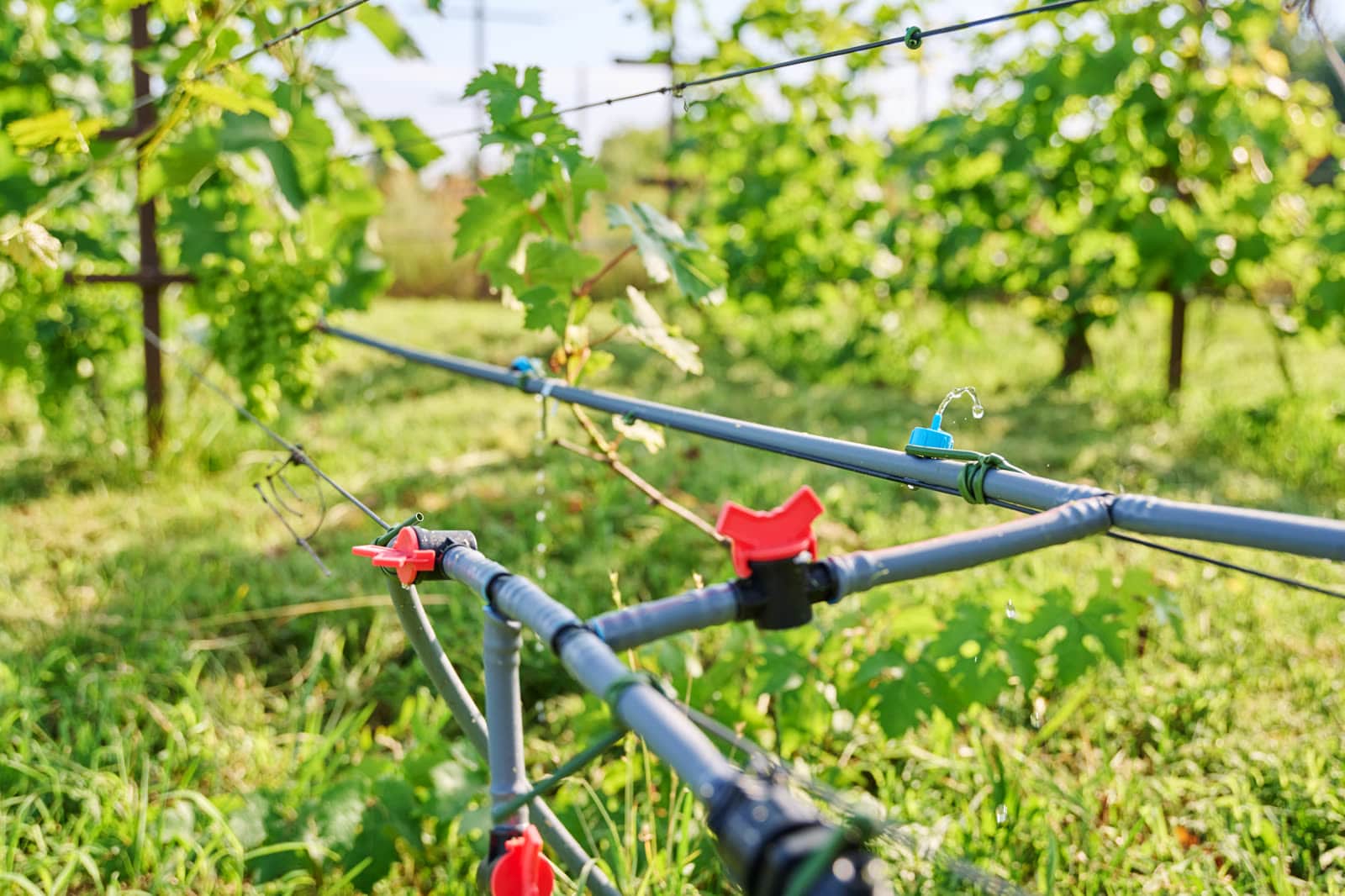
What the water cost
The bill says how much the farm paid. It does not say which parcel took the water or what a cubic metre added to the cost of the crop. Koru keeps both records: the money from the bill, in the Ledger, and the cubic metres you write on each irrigation. From the two it shows water per parcel, water per campaign and where your own record is silent.
On the screen
The journal against the bill
Why the farm's own irrigation record and the water community's bill are not the same number.
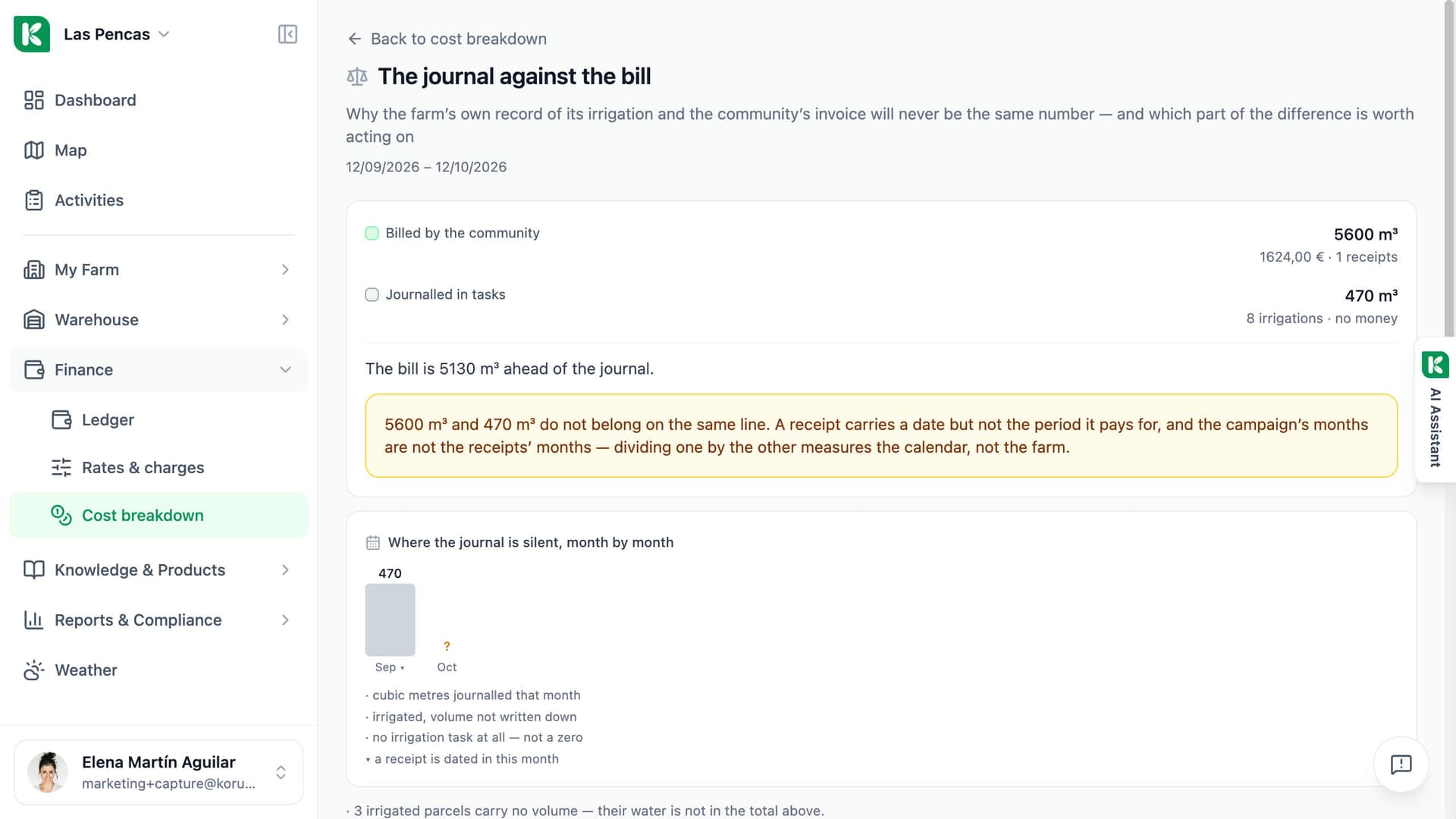
What the community billed
5,600 m³ and €1,624, from one receipt.
What the tasks recorded
470 m³ from eight irrigations.
Why they differ
A receipt carries a date, not the period it pays for — so one is not divided by the other.
Where the journal is silent
Month by month: volumes recorded, irrigations without a volume, months with no irrigation at all.
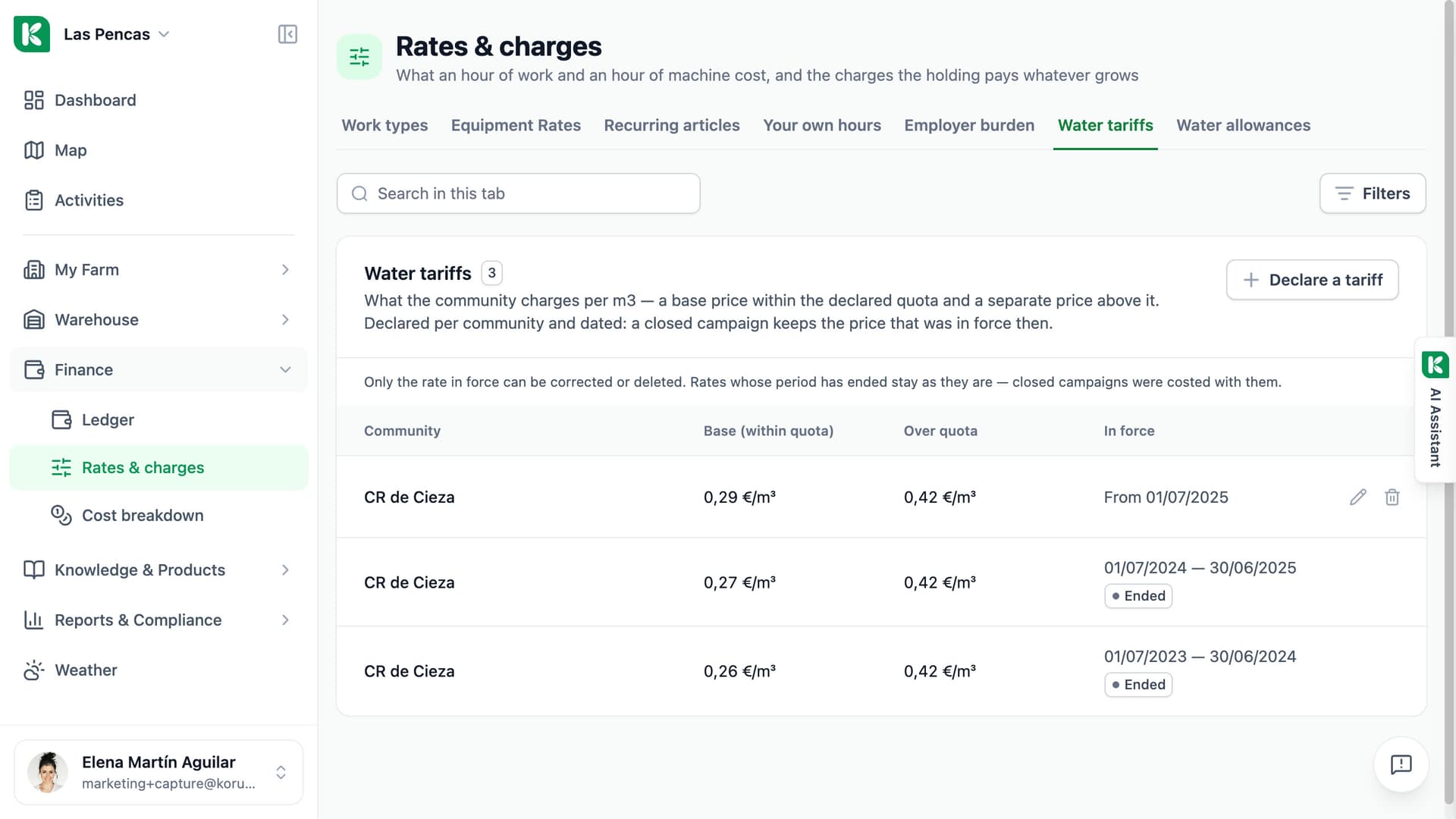
Declare the price of water once. Each irrigation is priced from it.
Under Rates & charges, the Water tariffs tab holds the price per cubic metre, per community and with a start date, so a closed campaign keeps the price it had. When you record an irrigation with its volume, Koru prices it with the base tariff of that day and keeps the result on the activity. An irrigation with no tariff is shown as not costed, never as zero. The Water allowances tab keeps the quota granted for each campaign as your own record.
- A price per cubic metre, per community, with a start date
- The quota per campaign, in cubic metres, kept on record
- Own well: leave the community empty; a price of zero is accepted
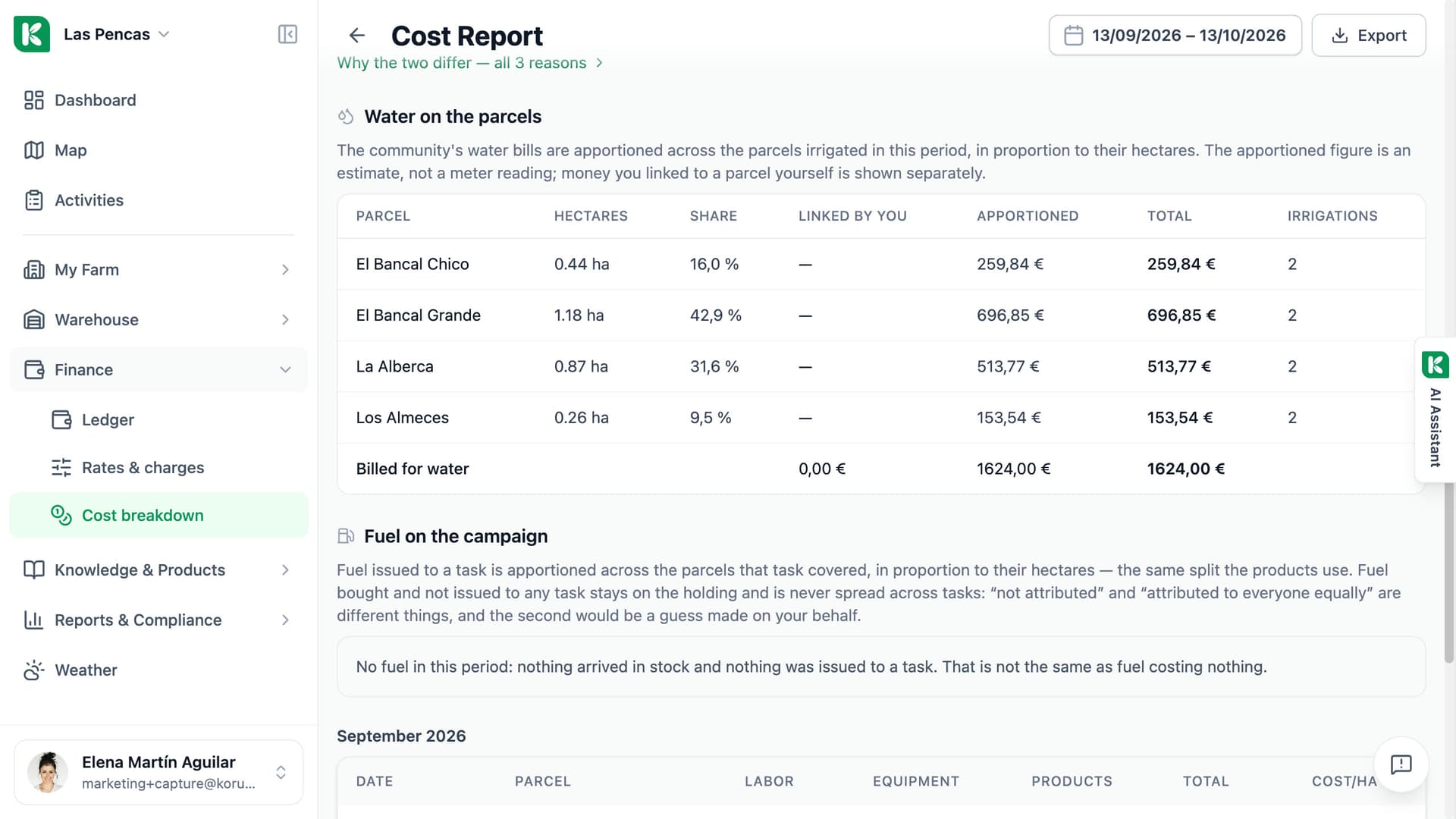
The bill goes to the parcels. Your journal checks the bill.
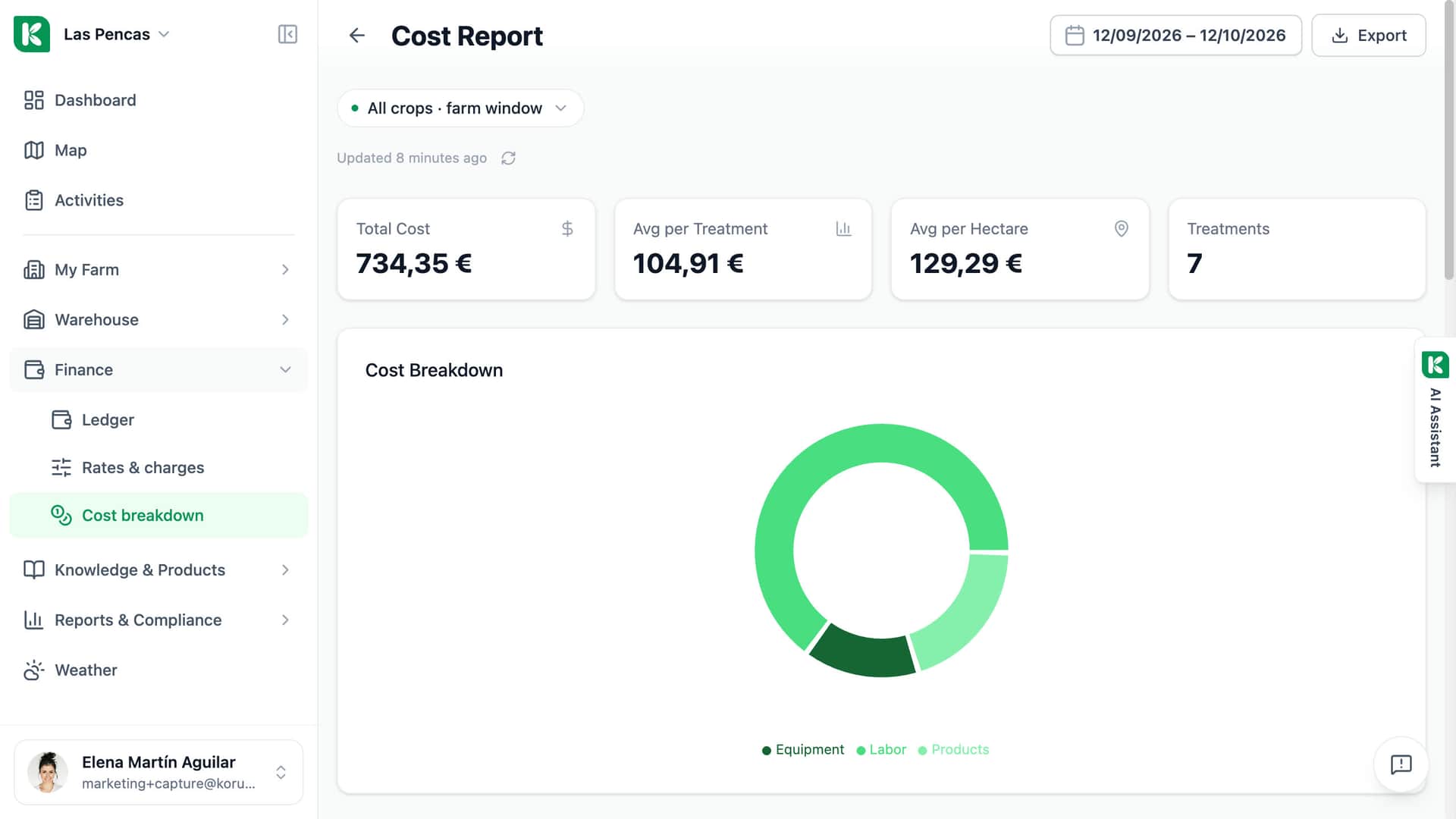
Enter the water bill in the Ledger with the cubic metres printed on the receipt. In the Cost breakdown, “Water on the parcels” spreads the bills over the parcels irrigated in that period, in proportion to their hectares, and says plainly that this is an estimate, not a meter reading. “The journal against the bill” then compares what was billed with what your irrigations recorded, month by month, and lists the reasons the two differ.
- Water bills spread over irrigated parcels by hectares
- Billed cubic metres beside journalled cubic metres, month by month
- Water across campaigns: m³ per hectare and water cost per kilogram
Water as a cost, from the tariff to the kilo.
Built on two records you already have: the bill and your irrigations.
Water tariffs
Price per cubic metre, declared per community and dated. A new tariff closes the previous one the day before it starts.
Water allowances
The quota granted for one campaign, in cubic metres, with an optional note on where the number comes from. A cut during the season is a new dated declaration.
Volume on the irrigation
A field for cubic metres on each irrigation activity. Leaving it empty records that the volume was not measured, which is not the same as zero.
Water bill in the Ledger
The bill is a ledger article in the water category, with the cubic metres printed on the receipt.
Water on the parcels
Bills spread over the parcels irrigated in the period, by hectares. Money you linked to a parcel yourself is shown separately.
The journal against the bill
Billed and journalled cubic metres side by side, with the months where an irrigation has no volume written down.
Water across campaigns
A report that puts recent campaigns side by side: billed m³, m³ per hectare, tariff, billed euros and water cost per kilogram.
Water in the campaign cost
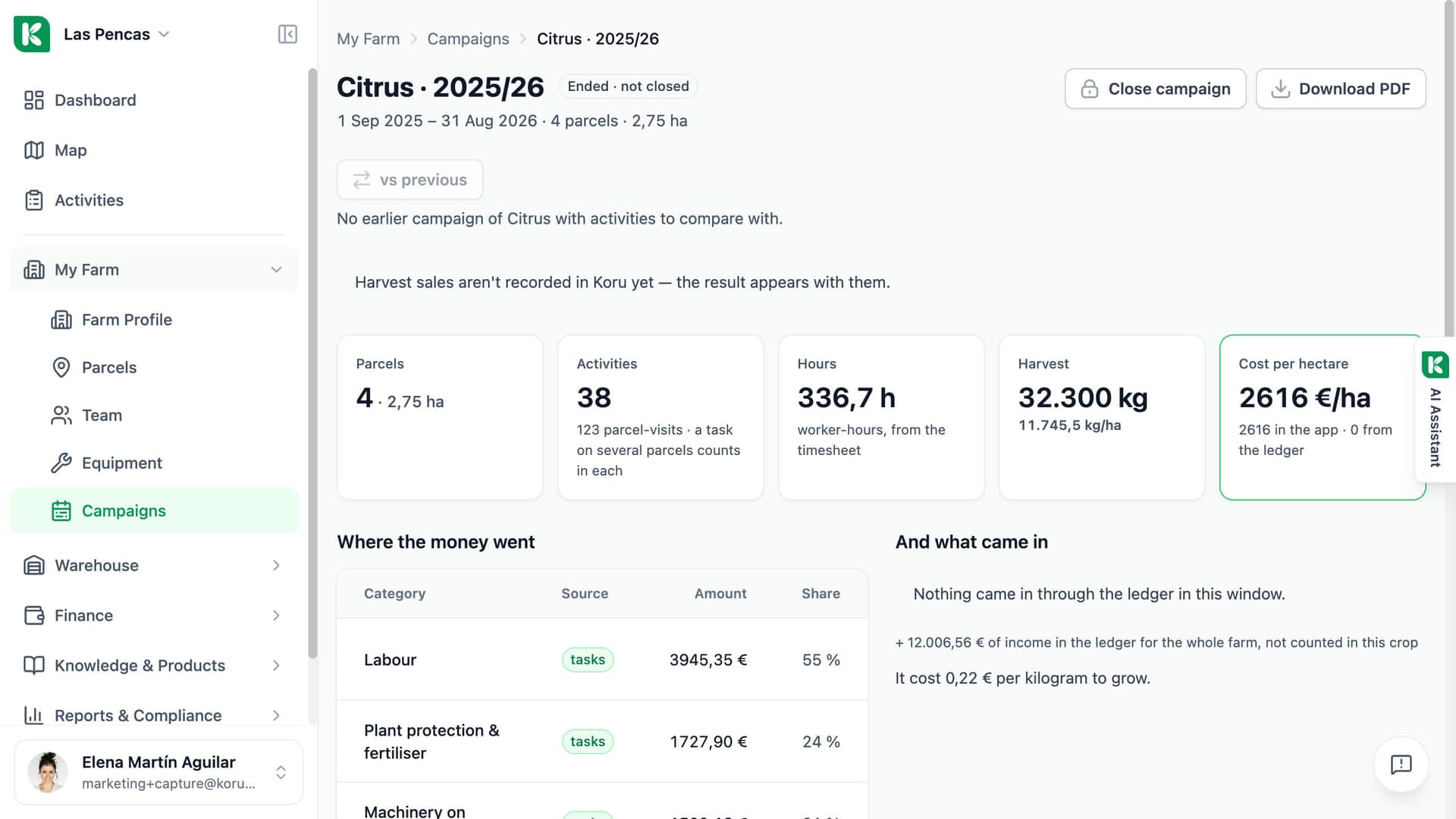
The water bill reaches the campaign's cost through the Ledger. The estimate on an irrigation is shown apart and is not added to the task total, so the same water is not counted twice.

For irrigated farms that pay for water and want to know where it went.
Single farm
It works with water from an irrigation community or from your own well. The pages open with your plan and the farm's “Cost & Time Tracking” switch, which is on by default.
Advisor
An advisor opens the farm and reads the same water pages the farmer reads: tariffs, the bill on the parcels and the journal against the bill, all built from that farm's records.
Cooperative
Each farm declares its own tariffs and quotas and enters its own bills. The water report has the same layout on every farm.
Know what the water cost on each parcel.
Water pages included in every plan.